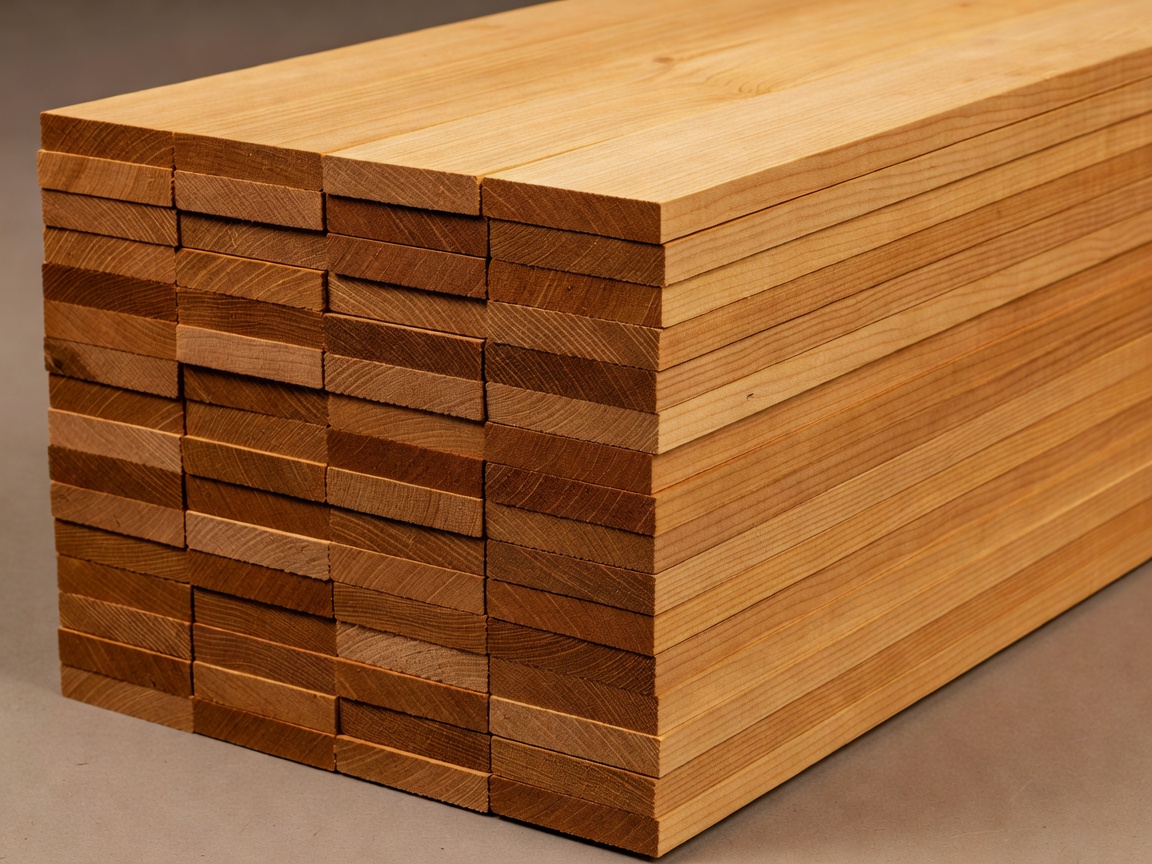
Stacked milled planks of thermally modified European aspen showing warm caramel hue and tight grain
Species Profile

Thermally Modified European Aspen (Thermo-Aspen)

Standard untreated timber contains sugars and cellular moisture that react vigorously to cyclic heating and cooling. Thermal modification bakes the timber in oxygen-deprived kilns above 190°C. This caramelizes the cellular cellulose, purging resin, drastically dropping equilibrium moisture content, and turning the wood a deep architectural cognac.

Thermo-aspen will not warp, cup, or twist under intense humidity swings. Crucially for bathers, its thermal conductivity is roughly 20% lower than untreated hardwood, meaning it stays comfortable against bare skin even when the sauna air reaches 95°C.
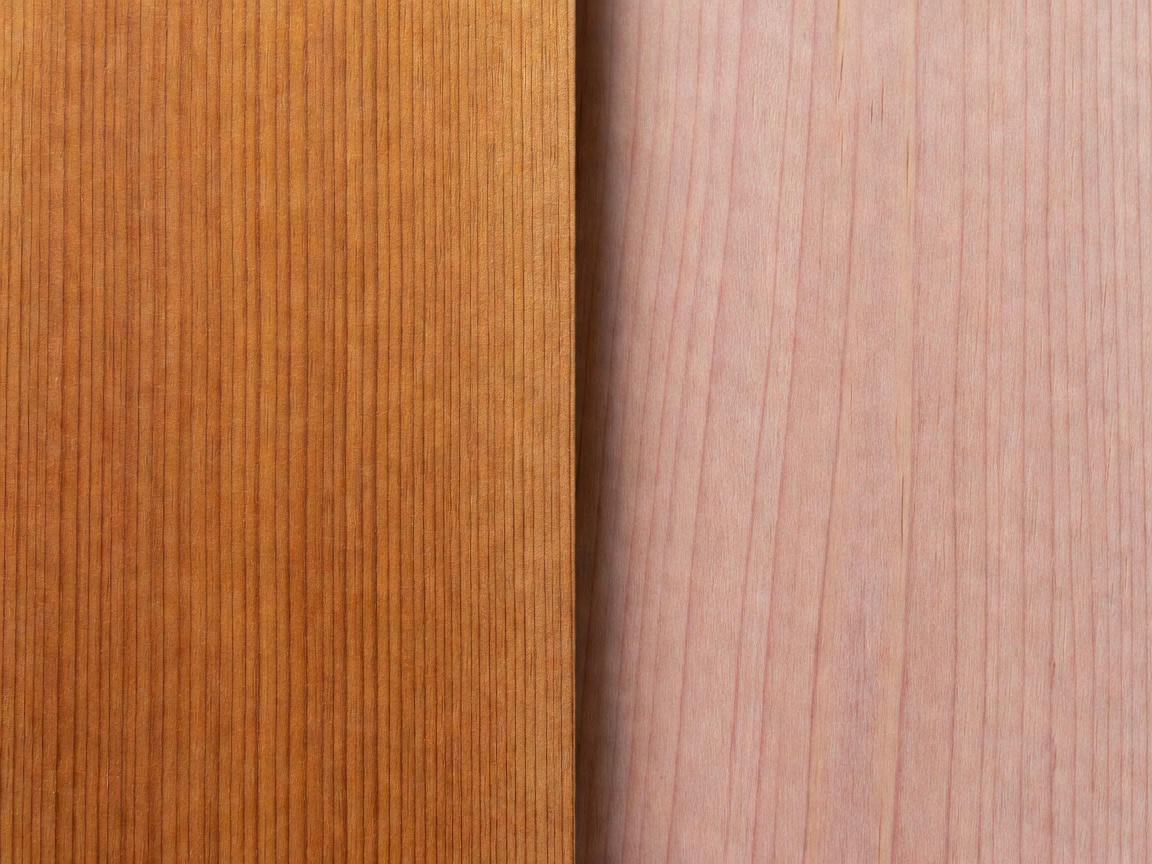
Close up texture of knot-free Western red cedar grain compared to soft pink Nordic alder
Species Profile

Western Red Cedar vs. Black Alder (Alnus Glutinosa)

Western Red Cedar remains a staple for good reason: natural thujaplicins grant it exceptional resistance to decay and mold, accompanied by a rich, cedar-chest aroma. But cedar is aromatic—and for sensitive bathers or boutique hotel environments where guests have respiratory sensitivities, strong scents can become overpowering over a 30-minute session.

European Black Alder offers a refined, gentle alternative. It features a subtle honey-reddish grain, virtually zero knot pockets, and an almost neutral, clean scent. It absorbs löyly steam evenly and does not sweat sticky sap pockets like pine can when heated rapidly.

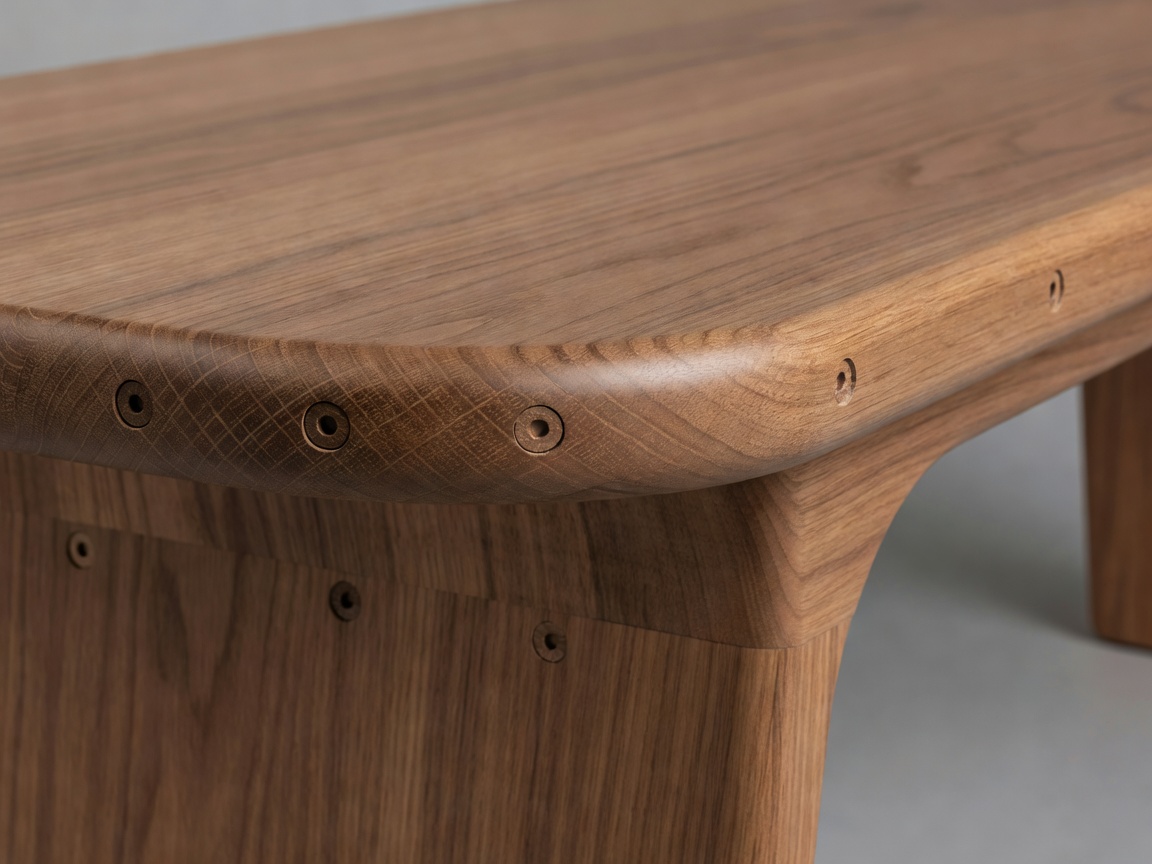
Detailed close-up of rounded bench edge profile and concealed underside screw fastenings
Joinery Craft

Bench Boards: Thickness, Radii & Hidden Fasteners

Never accept thin 12 mm paneling for seating surfaces. Under the dynamic weight of multiple bathers, thin slats flex, loosen, and creak. We specify minimum 28 mm to 42 mm thick solid timber bench profiles with softly rounded 5 mm edge radii.

Fastener rules are absolute: stainless steel screws must always be driven from the underside of the bench framing into the slats. A screw head exposed on the upper surface will heat to well over 80°C, creating an immediate skin-burn hazard for unwary bathers.

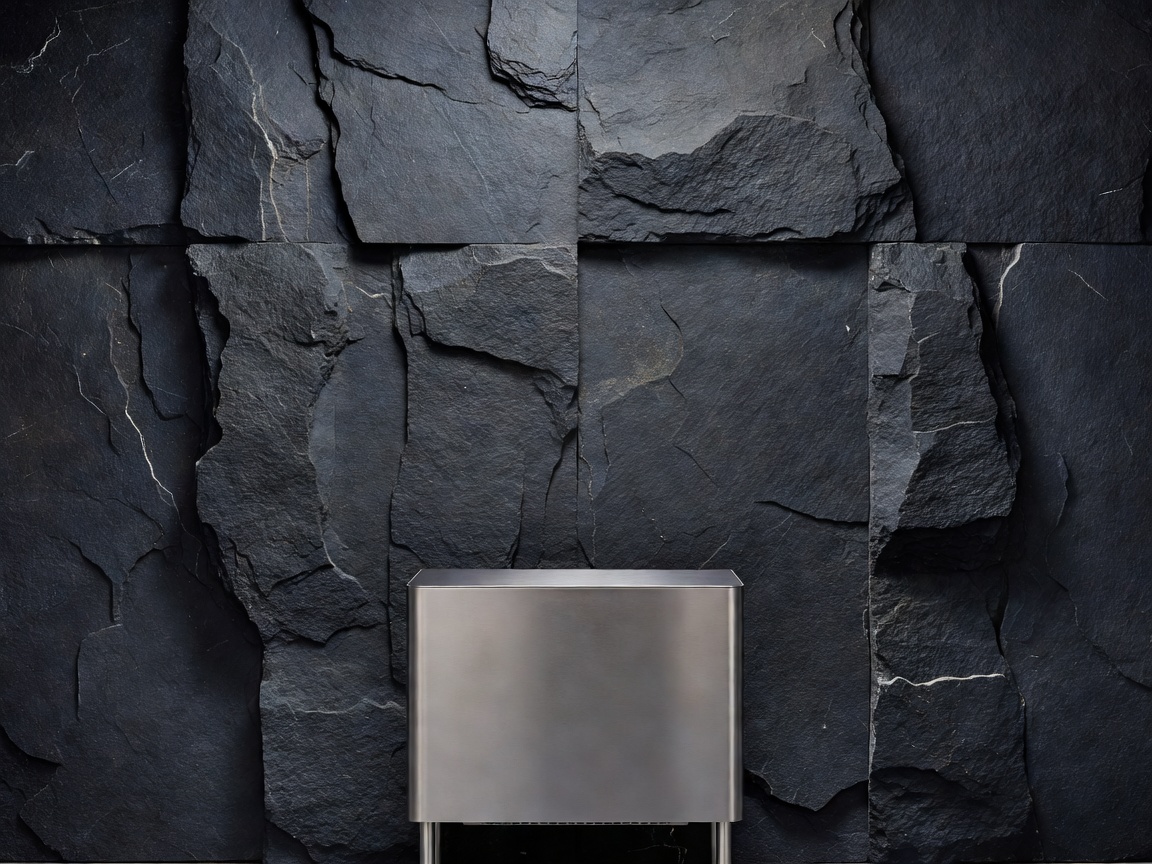
Textured dark split-face quartzite wall panel positioned behind a minimalist stainless steel sauna heater
Mineral Substrates

Hearth Stones & Thermal Protection Walls

Placing wood within 200 mm of an unshielded 9 kW sauna heater is a clear fire hazard. Instead of basic cement boards, we integrate architectural split-face quartzite, honed granite, or Finnish soapstone backdrops.

These natural stones absorb aggressive radiant heat directly from the stove shell and release it back gradually into the cabin as soft infrared energy long after the heating cycle ceases. Stone panels must be mounted with a ventilated 20 mm air cavity behind them so the moisture cannot migrate into adjacent wall framing.

Comparative Timber Specification Matrix

Choosing timber for an architectural sauna requires balancing skin comfort, scent, moisture tolerance, and long-term patina. Here is our direct studio evaluation:

Timber Variety Tactile Heat Comfort Aroma Intensity Resin Leak Risk Best Application
Thermo-Aspen Exceptional (very low thermal transfer) Neutral, toasted bread note Zero (resin purged in kiln) Primary benching, contemporary vertical wall cladding.
Clear European Alder High (cool to touch, soft surface) Mild, pleasant natural wood Negligible Walls, ceilings, backrests where warm honey tones are desired.
Western Red Cedar High (stable cellular structure) Pronounced, spicy herbal aroma Low in clear grades Private residential wellness sanctuaries; traditional aesthetic.
Nordic Spruce (Knotty) Moderate (denser fiber structure) Traditional pine forest scent Medium (knots may weep sap over 85°C) Walls in classic rustic cabins; avoid directly on bench seats.
Abachi / Obeche Exceptional (extremely low density) Neutral to damp earthy scent Zero High-turnover commercial hotel benching (splinter-free).

The Truth About Wood Sealants and Oils

Standard polyurethane varnishes, solvent-based deck stains, and synthetic marine sealers have absolutely no place in a sauna. Under elevated temperatures, these chemistries off-gas volatile organic compounds (VOCs) that irritate lungs and mucous membranes. We leave timber raw or apply food-grade, cold-pressed paraffin oil exclusively to the bench seats to repel sweat marks without sealing the timber's breathability.

Tactile Samples

Order a Curated Timber & Stone Sample Kit

Experience the actual grain, aroma, and edge profiles of Thermo-Aspen, Red Cedar, Black Alder, and split quartzite in your own studio before making formal specifications.